The Musgrave Manifesto
Register to receive The Musgrave Manifesto in your inbox and let me know what you think.
Click on the images to enlarge them.
Use the arrows at the foot of the pages to move to other posts.
In my Easter bonnet…
Sunday, March 31st, 2013
At Easter, I always think of Judy Garland and her appreciation of a man in a hat:
Never saw you look quite so pretty before
Never saw you dress quite so handsome – what’s more
I could hardly wait to keep our date
This lovely Easter morning
And my heart beat fast as I came through the door
For…
In your Easter bonnet, with all the frills upon it
You’ll be the grandest fella in the Easter parade.
I’ll be all in clover, and when they look us over
We’ll be the proudest couple in the Easter parade.
On the avenue, Fifth Avenue,
The photographers will snap us
And you’ll find that you’re in the rotogravure.
Oh, I could write a sonnet, about your Easter bonnet
And of the guy I’m taking to the Easter Parade.
I haven’t been on an Easter Parade, but it seems a good moment to take a walk down my headwear memory lane.


Here are some holiday snaps from the early 60s. I was born in 1955, so take a guess at the dates yourself.
.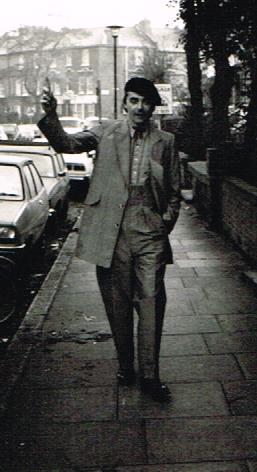

By 1982 I was living in London, working on Drapers Record and embracing retro fashion, which included a zoot suit, a beret, a DB suit and a trilby.



I like the practicality of headgear, as seen here in the American Mid-West in 1977, in Iceland in 2006 and in Yorkshire in 2010.


Travels are a good excuseto unleash an unexpected head covering, such as this astrakhan cap in Russia in 1986, a hanky above a Costa Rican volcano in 1992 and a spotted hanky in Portugal in 2006.



Today I am not a great fan of inexpensive peaked caps, but in the past I have worn one in Thailand (1990), Dominican Republic (1988) and London (1987) and (1992).


My straw hats date back to the early 1980s. If we ever have any good weather again , I will dig out the neat Independent Italia hat that Lapo Elkann gave me in from 2009 and the blue trilby by Ede & Ravenscroft from 2012.


You can’t go wrong with a flat cap: mine include one a grey linen one from Barneys New York, and various styles from Bates the hatter in Jermyn Street.

I wore this trilby in the late ’70s. It’s time to get a new one.

I have a soft spot for my deerstalker.

Don’t worry – I only wear this decorated Turkish cap at home!

This is my latest acquisition – a tweed trilby from Failsworth.

As the old ad slogan says, if you want to get a head, get a hat.
Moto’s marvellous miniatures
Friday, March 29th, 2013
One of the bonuses of my job is that I meet interesting people. One such is a bespoke tailor, Yoshinori Yamamoto, who is universally known in the trade as Moto.
Born on 24 December 1939. Moto was the second son of a tailor in Osaka, Japan. From the age of five, he took up the needle in his father’s workshop. Between 1959 and 1963, he followed the correspondence course for the famous Tailor & Cutter Academy in Gerrard Street, Soho, London, the world’s pre-eminent centre of bespoke tailoring training.

By 1965 Moto was in London studying at the T&C Academy, from where he picked up this handsome diploma and started on a career in tailoring. Around the same time, he also took up wrestling and ended up as the British Southern Area Flyweight Champion in 1966. As he recalls: “I was very poor at that time, not eating well, so I surprised myself.”
Throughout the ’60s and ’70s, despite then having limited English, Moto found work with, among others, Kilgour, French & Stanbury (1967-68) and Hawes & Curtis (1968-70), both in Dover Street. He then became a cutter with Trafalgar Clothing (1970-72), which ran 25 menswear shops in name of G S Roseman, Leslie Andrews and Dombey & Son in the City. Between 1972 and 1974, he worked with the legendary Douglas Hayward, before joining Hayward’s friend Sandra Weiberg in her new women’s shop, Ladies Habits.
Following Mrs Weiberg’s death in 1978, Moto worked for himself and then returned to Hayward between 1983 and 2001. During the early part of this period, he was mentioned in The Official Sloane Rangers Handbook as a recommended tailor. Moto worked with my pal Charlie Allen in Islington until 2004, when he supposedly retired.
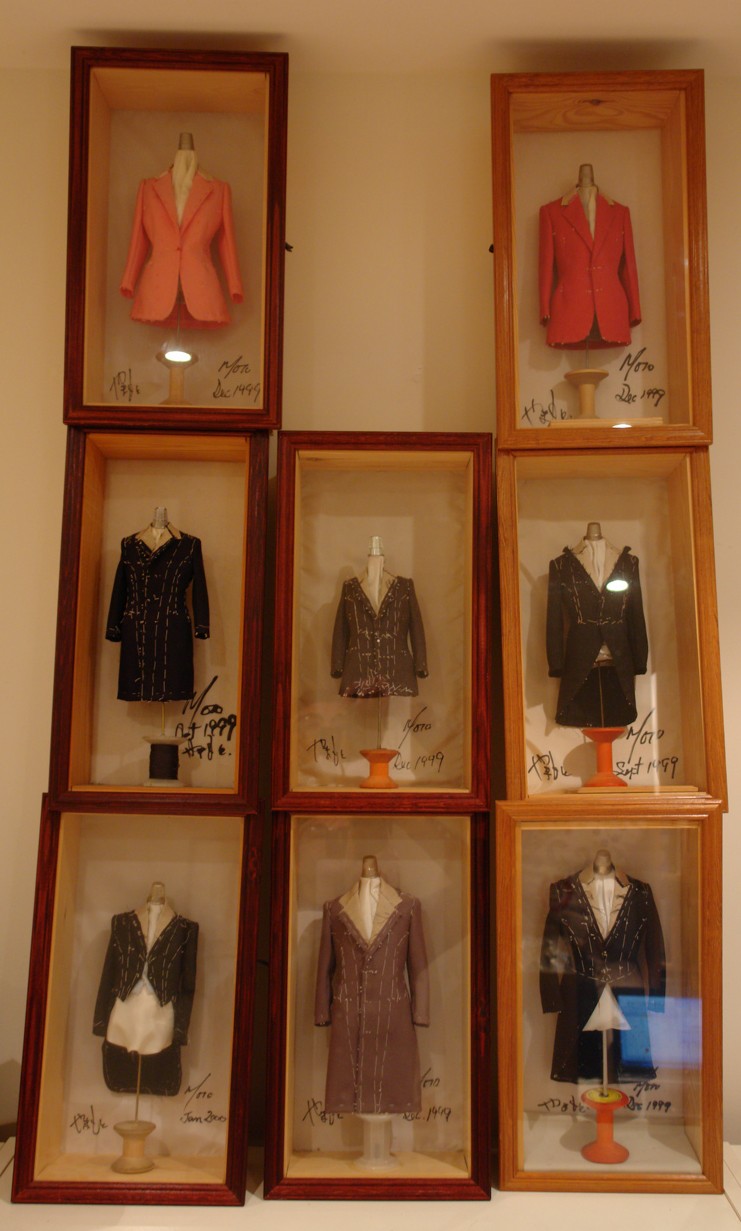
More than 20 years ago, Moto began making miniature jackets to show his cutting and tailoring skills. He is now looking to sell a small number of these amazing little creations. The precision and neatness is very impressive as the jackets are only about 12 inches high.
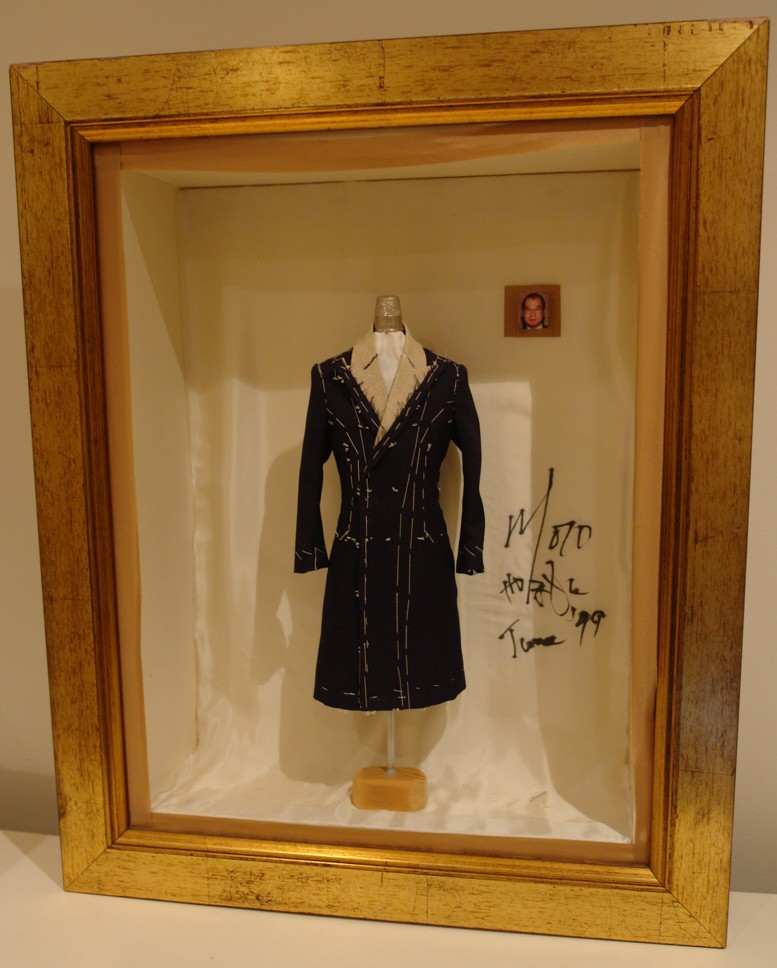
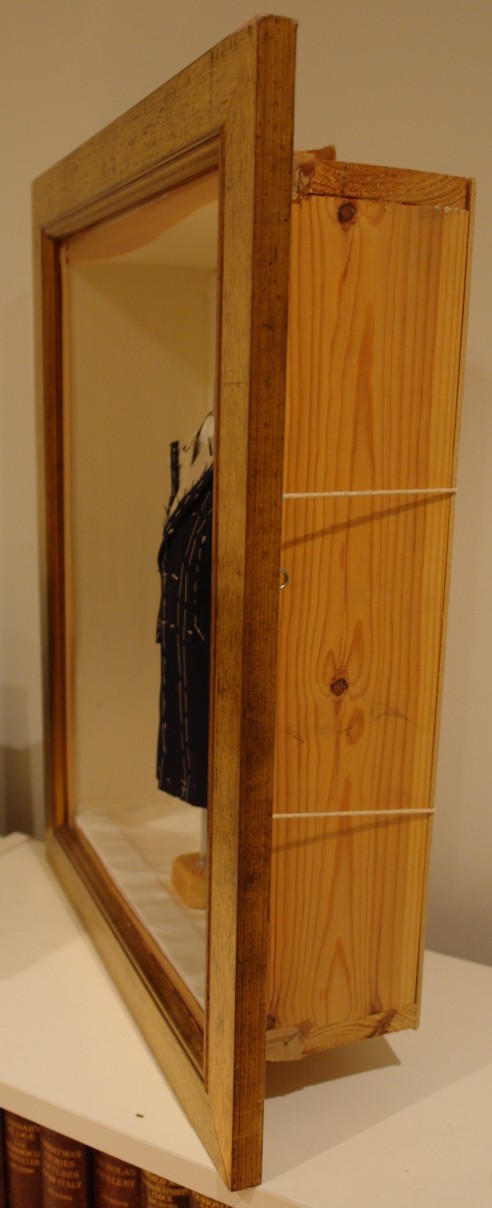
Some of the examples are housed in display cases that were hand-made by Moto, who also fashioned the tiny mannequin forms, the stands made with cotton reels and the thimble “head”. He likes to include a small photo of himself on most of his creations.


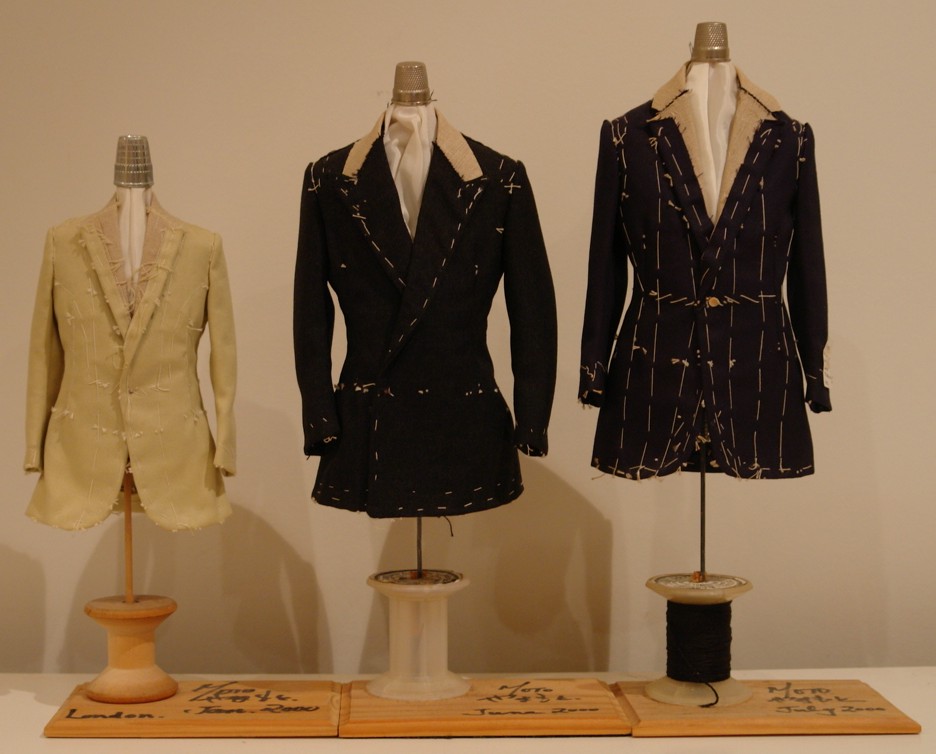
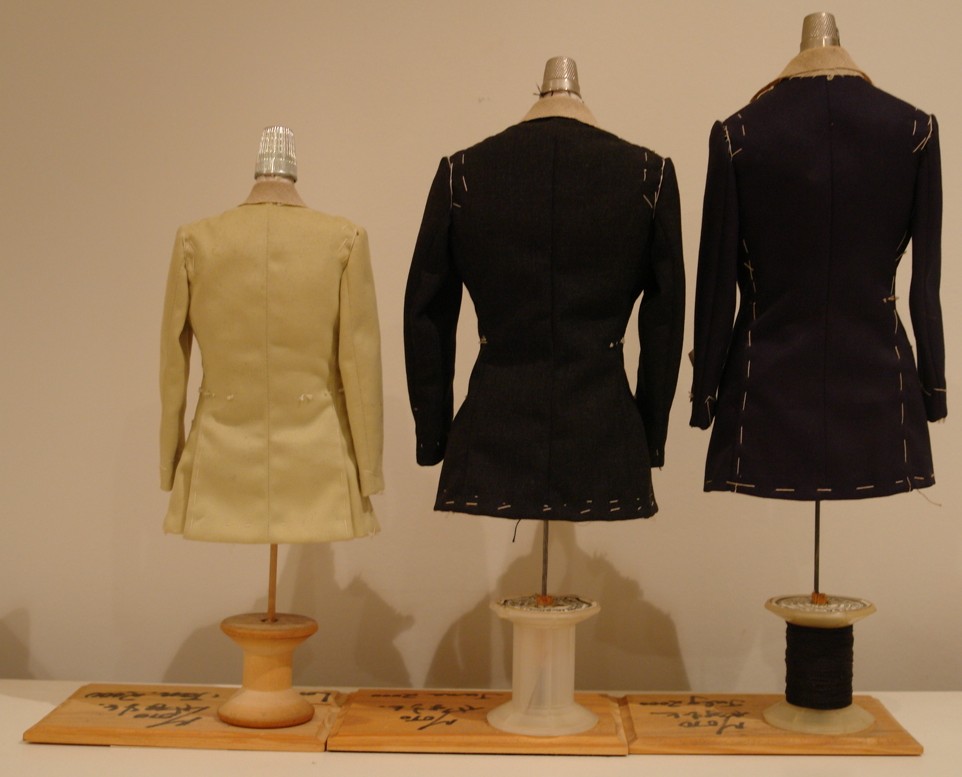
The attention to detail is amazing – even the backs are immaculately finished.

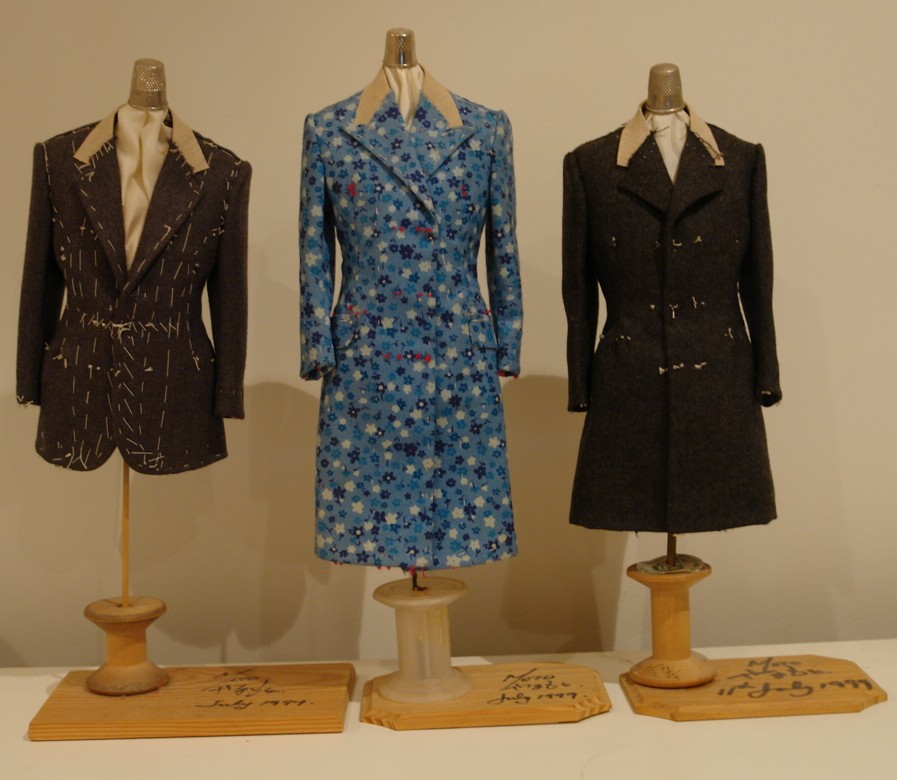
Moto has included women’s garments among his miniature wardrobe. 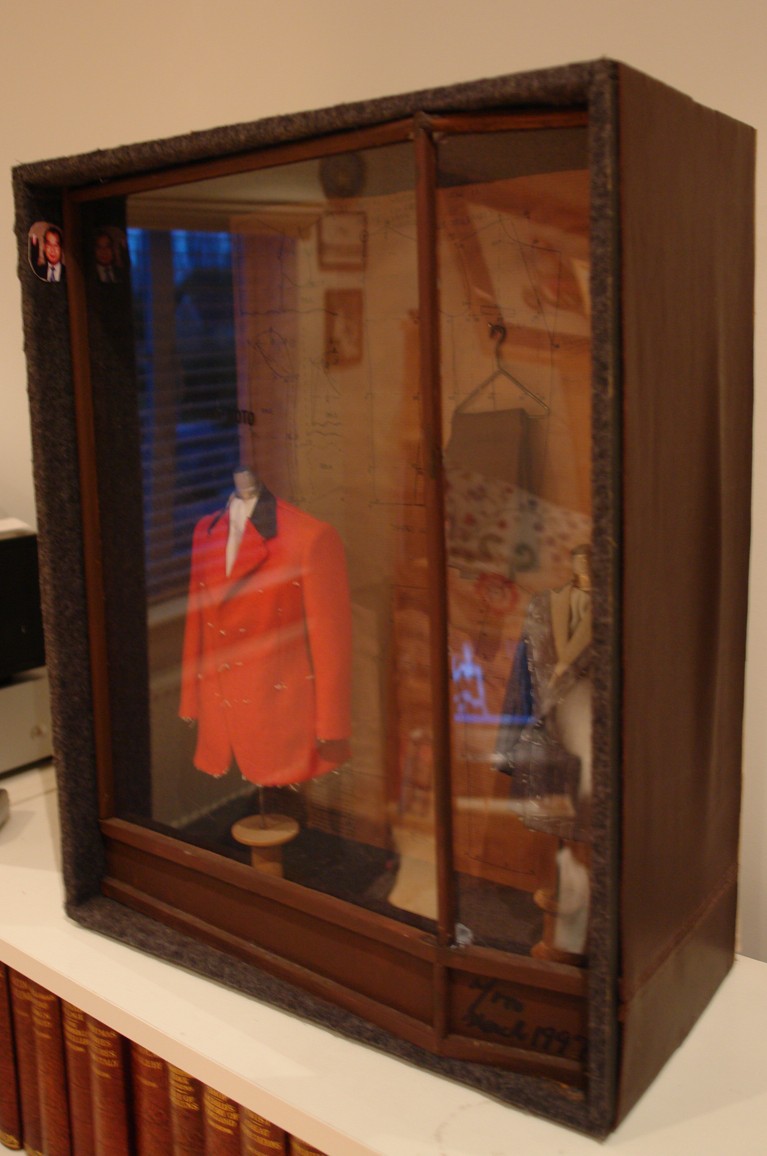

I am particularly impressed by the trompe l’oeil shop windows he has created showing interiors of imaginary tailors’ shops.
Since the mid-1970s, Moto has been painting and has shown himself to be a skilled copyist. This is his version of The Tailor (Il Tagliapanni), from about 1570, by Giovanni Battista Moroni, which hangs in the National Gallery. A version of this portrait was the emblem of The Tailor & Cutter Academy.

Moto has also produced a series of mixed media self-portraits showing himself at work. This one is decidedly three-dimensional and even includes in it a tiny electric light bulb.
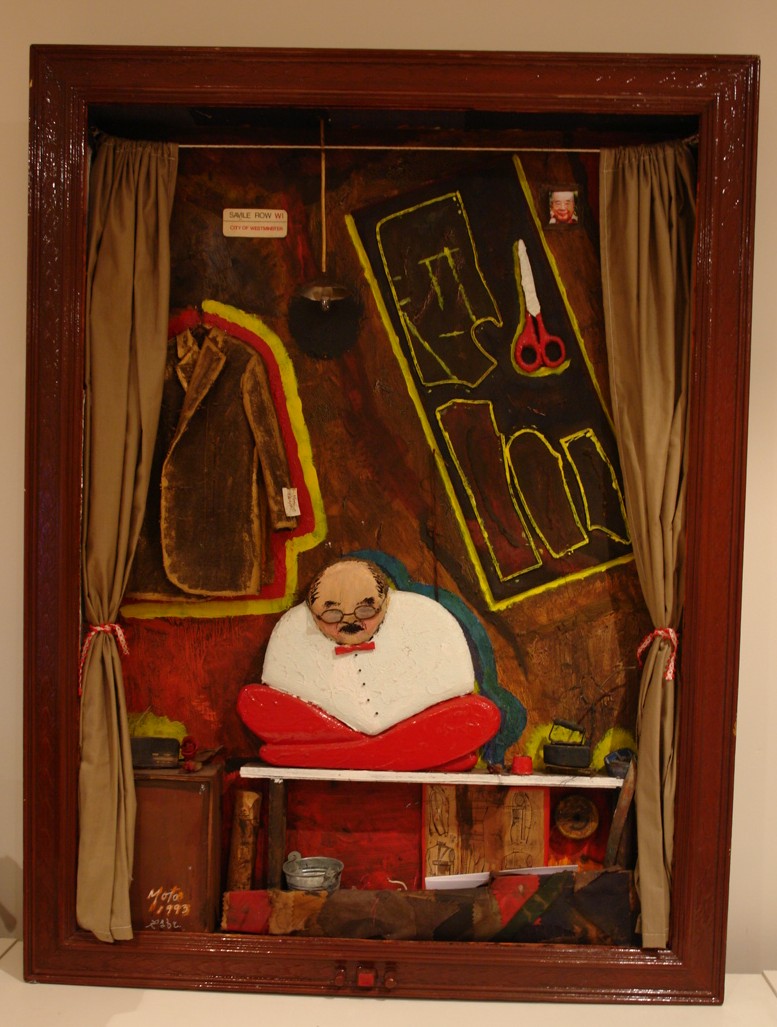
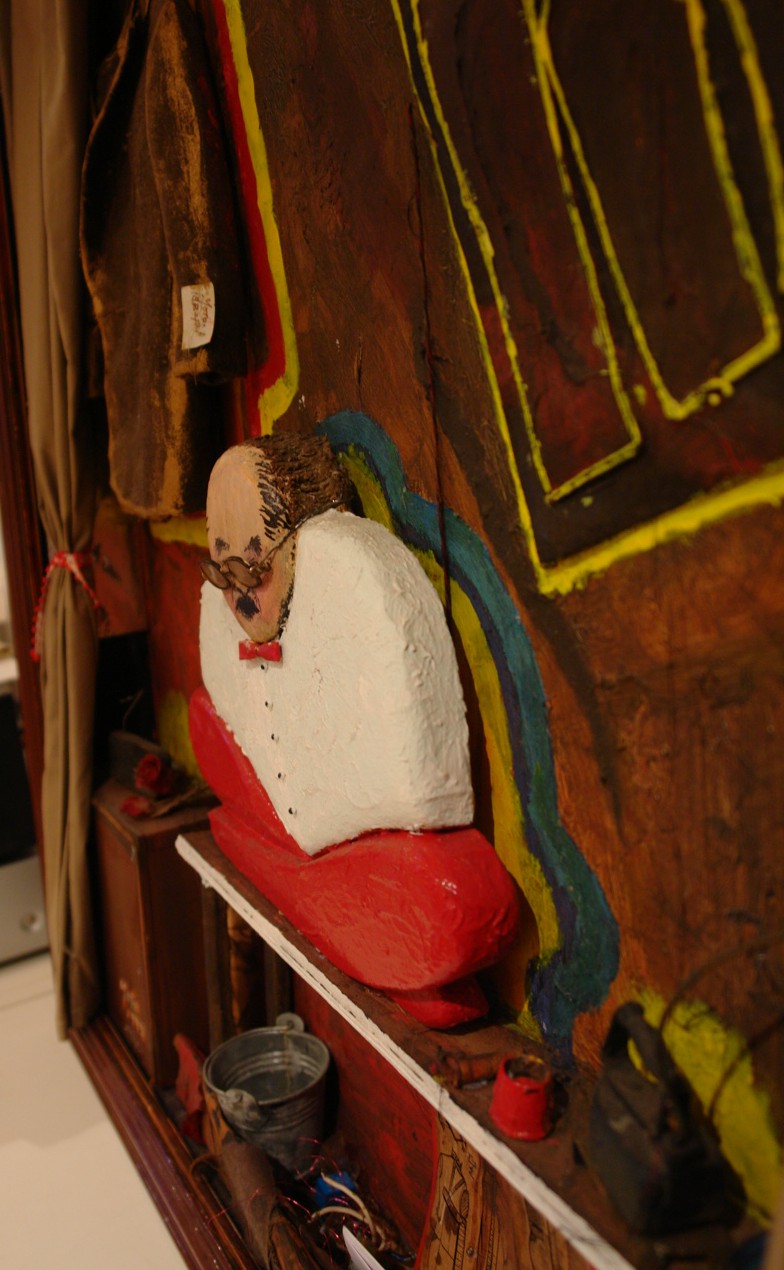
This one uses lots of brass buttons.

This one encapsulates the solitary existence of the bespoke tailor.

If you are interested in buying his miniature models or the artworks, contact Moto directly on yy4349@gmail.com. We are unlikely to see his like again.
The Sartorialist loves MENSWEAR
Wednesday, March 27th, 2013
My Wednesday started well with a beautiful sunrise and then got even better when my daughter Florence pointed out that The Sartorialist had featured Tom Phillips’ book of vintage menswear postcards (which includes my foreword) with the message: “Fashion and vintage photographs! What more could I ask for in a book?”
Quite!

Bodleian Library Publishing put an image from the book on its catalogue last season.

I can recommend all five other titles in the series – Fantasy Travel, Readers, Women & Hats, Bicycles and, my poignant favourite, Weddings. “Ordinary” people are every bit as fascinating as so-called celebrities.


Let’s bring back illustration
Tuesday, March 26th, 2013
Illustration is an overlooked, if not forgotten, art form these days. An obsession with photography – digitally enhanced more often than not – dominates the media, but I would like to see some creative company revive the classic techniques of the past. They could do worse than look to these examples for inspiration – all taken from a catalogue of a British company called Thexton & Wright.


I am guessing that these date from before World War II. Any other suggestions gratefully received. Google brings up Thexton & Wright mentioned in an ad in the Sydney Morning Herald in 1950 alongside such fine tailoring names as Simon Ackerman, Maenson, Sumrie and Hector Powe. It also reveals that a company with the name of Thexton & Wright is listed as an investment company in Thirsk, which leads me to guess that the tailoring firm may have been part of the Austin Reed group, which was based in the north Yorkshire town. Anyone know better?
Going international on the internet
Sunday, March 24th, 2013
Isn’t the internet wonderful? People all over the world have made contact with me thanks to this comprehensive global network. And what nice people too.
I can point readers of this blog in the direction a Finnish website called Keikari (which may well be the Finnish word for “dude”). The creator, Ville Raivio, was kind enough to invite me to join his list of prestigious interviewees. Click through to read my scribblings.

I was equally flattered to be contacted by Mircea Cioponea, the founder of a footwear-focused website in Romania called Claymoor’s List. Once again, I am in eminent company.

Most surprising was the email I received from Tadhg Taylor, who runs the Fully Booked secondhand bookshop at 824 High St. Thornbury, Melbourne, Victoria 3071, Australia. He requested a photo from me and then sent evidence that it had been mounted at the far bottom right “just below Richard ‘Bespoke’ Anderson and next to Virginia ‘Chelsea Girl’ Ironside”.

Tadhg persuaded me to send a 10 x 8 print across the globe by the direct route of undiluted flattery, which went along the lines of: “I love your writing, Sharp Suits is a classic and, let’s face it, no other author is going to look as natty as you!” Sad to report, the shop’s cat, Princess Igor, does not seem that impressed.

And, finally, only last week I was snapped at The Golden Shears event by a busy photographer called Judy Fan in the very pleasant company of Ying Mei Quan from the Savile Row firm of Welsh & Jefferies. Mei won the top prize in this young tailors’ competition two years ago. All you Mandarin scholars can read the accompanying text here

The Shard: Going up in the world
Friday, March 22nd, 2013
If my old friend Adrian Wright ever decides to stop being leasing director at the Gloucester Quays outlet centre, he has a brilliant career in events planning ahead of him. Last summer I was with a fine group he took to the Henley Royal Regatta. This week I was lucky enough to be included in Adrian’s latest expedition – to The Shard at London Bridge. And what an amazing experience it was.
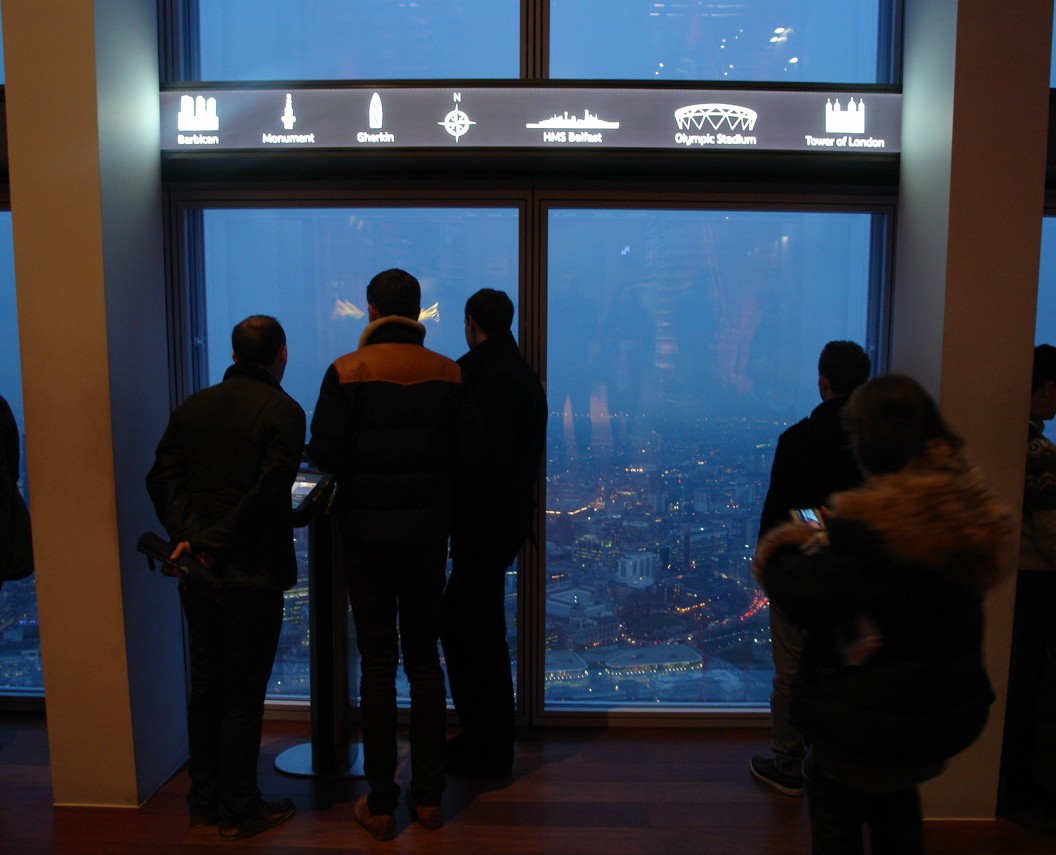
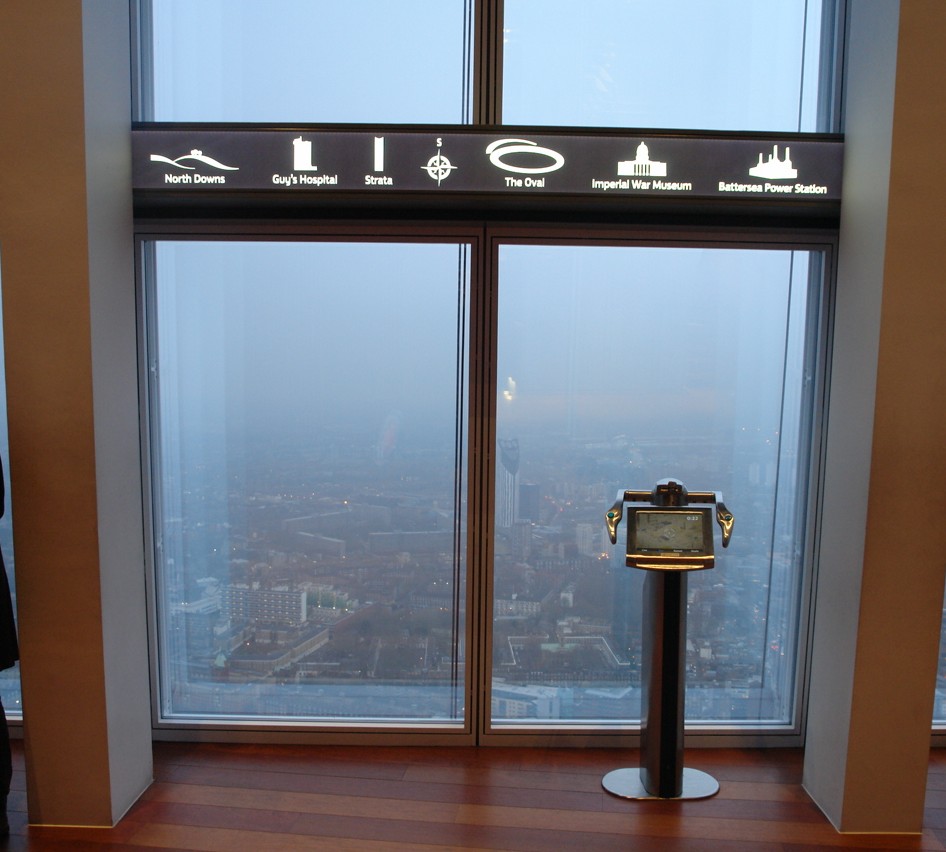
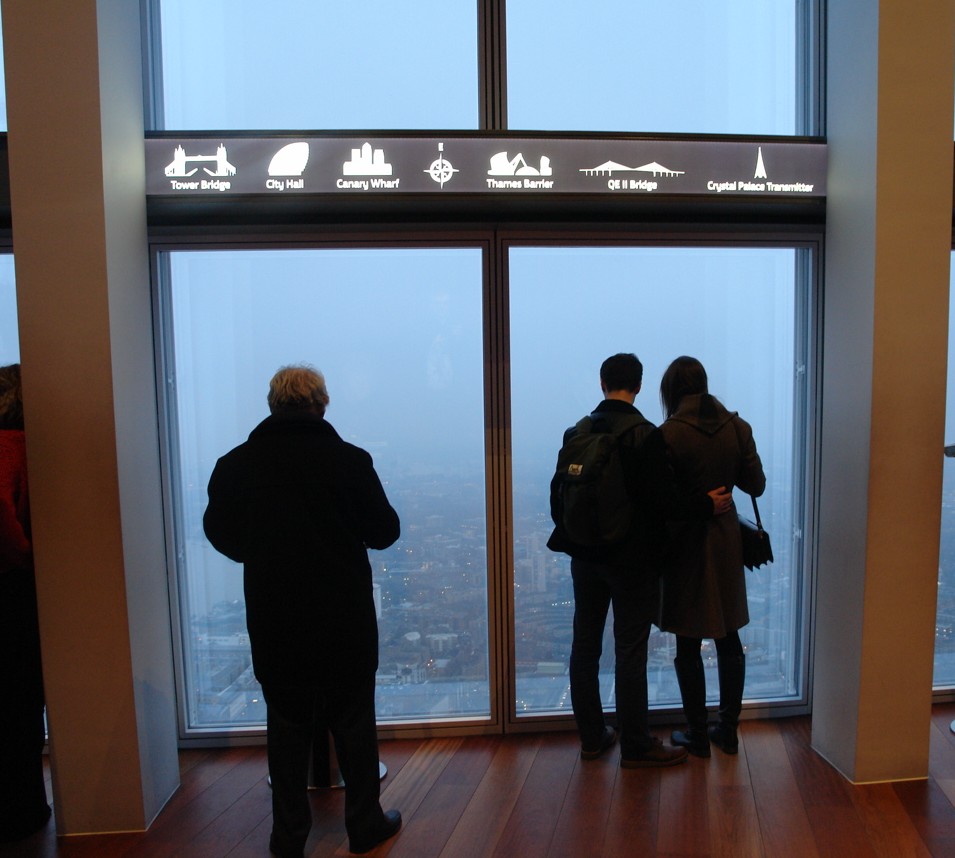
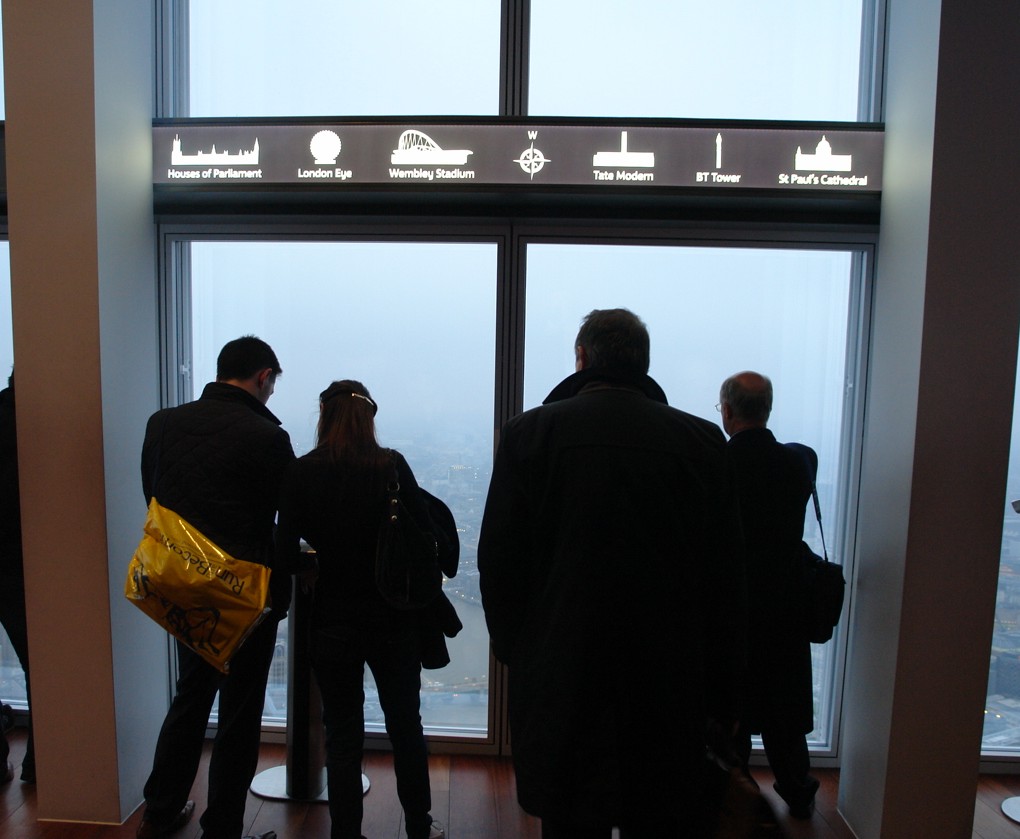
The Shard is the highest building in western Europe, soaring a breath-taking 1,1016ft (310m) into the sky on the south side of the Thames not far from Tower Bridge. From floors 68, 69 and 72, a 360◦ view of the capital is spread before you and quite humbling it is too. The top level has no roof and so here – at 800ft (244m) above street level – you can begin to imagine what it is like to be a bird. Only in the past 80 years or so could anyone stand so high on a man-made structure (the Empire State Building, which is 1,250ft (381m) high, was completed in 1931). Incredibly, there are about 35 buildings in the world taller than The Shard


Although Adrian failed to arrange good weather – get it together, man! – even the views through the mist were amazing. It is interesting to look north-west across the river to St Paul’s Cathedral, which would have looked huge when completed in 1710, and see it like a doll’s house accessory. Apparently, on a clear day, you can see 40 miles (64km) from The Shard. I can believe it.
So many thanks, Mr Wright, for the invitation and the hospitality.

It was good to catch up with pals such as Nigel Addison of the lingerie company Eveden…

…and property PR Sean Kelly, who fancied picking up the Airfix model-sized HMS Belfast far below.

Appropriately for this blog, there is a strong fashion connection to The Shard because it was conceived and developed by Irvine Sellar, who hired architect Renzo Piano to design it. Older readers will recall that before he turned to property development Irvine Sellar was a major player in high street fashion in the 1960s and 1970s, best known for his unisex chain called Mates. He has certainly gone up in the world since then.

PS: From the 72nd floor viewing platform, this amazing “vertical city” continues upwards for a further 216ft (66m).
Power & Style and Gieves & Hawkes
Thursday, March 21st, 2013

The best address in menswear, No 1 Savile Row, the HQ of Gieves & Hawkes, was the venue tonight for an enjoyable get-together to discuss the relationship between power and style.

Appropriately enough, given G&H’s links with the Navy (which date back to the founding in 1785 of what became Gieves), the opening address was delivered by Admiral Lord West. The former First Sea Lord looked suitably powerful and stylish in his uniform – which had been tailored by Gieves & Hawkes, of course. In his entertaining and amusing speech, he revealed that his exalted rank (he is still on the Navy’s Active List) requires him to have no fewer than 28 uniforms in his wardrobe. He also showed us that this jacket has a surprising rich blue lining – so his uniform is not very uniform.

The main proceedings of the evening involved husband-and-wife team Francois and Dominique Gaulme answering questions from my friend, the eminent fashion commentator Colin McDowell, who was having a dressed-down Thursday. The Gaulmes have written a handsome volume called Power & Style (Flammarion), which examines the role of Les Habits du Pouvoir (The Clothes of Power) from the days of early history.

After the panel discussion, I was pleased to spend time with members of the relatively new Gieves & Hawkes team, including its new creative director Jason Basmajian and managing director Ray Clacher.
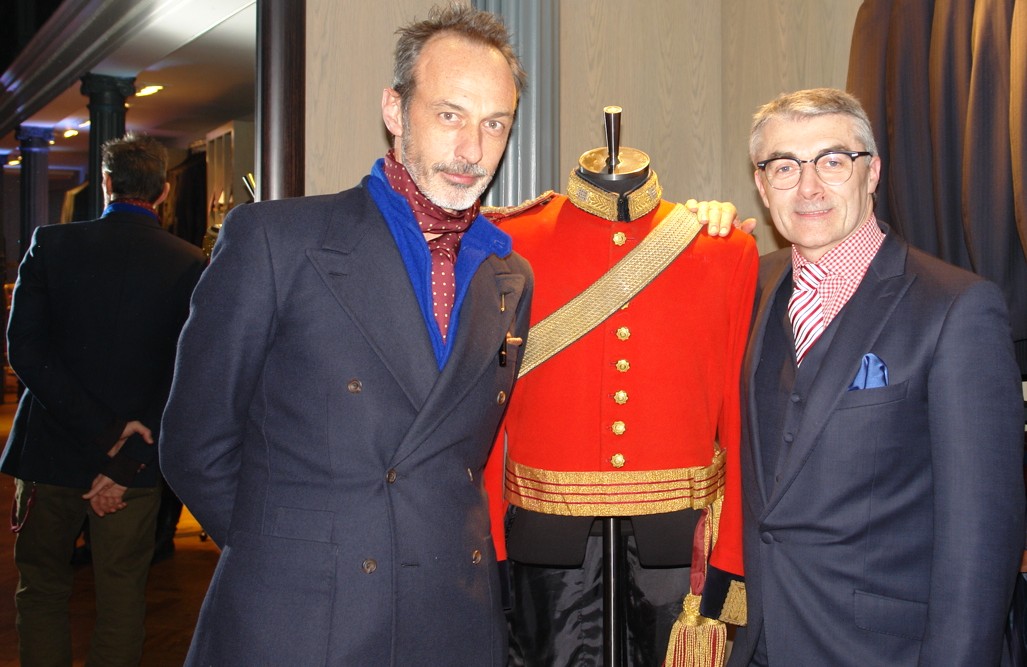
And to complete a very enjoyable evening, I espied my old Sportswear International colleague from many moons ago, William Gilchrist, who is now (as indeed he was back in the late 1980s and early 1990s) one of the best fashion stylists in the business. It’s about time Cult, the brilliant book on classic jeanswear that he produced with SI’s photographer Roberto Manzotti in 1992, is re-issued. William doesn’t even have a copy himself of this highly desirable collectors’ item. But I do…
The Man Who Fell To The V&A
Wednesday, March 20th, 2013
Even the press view of the David Bowie retrospective at the Victoria & Albert Museum was mobbed. I was told 600 of us were turning up to bump into each other while trying to photograph every one of the 300 exhibits that have been assembled for this astonishing show, which is being presented “In partnership with Gucci” (which means the Italians stumped up a hell of a lot of cash, I presume). Did I read that 30,000 or was it 40,000 tickets have already been sold? So it’s a good job it’s running until August 11.

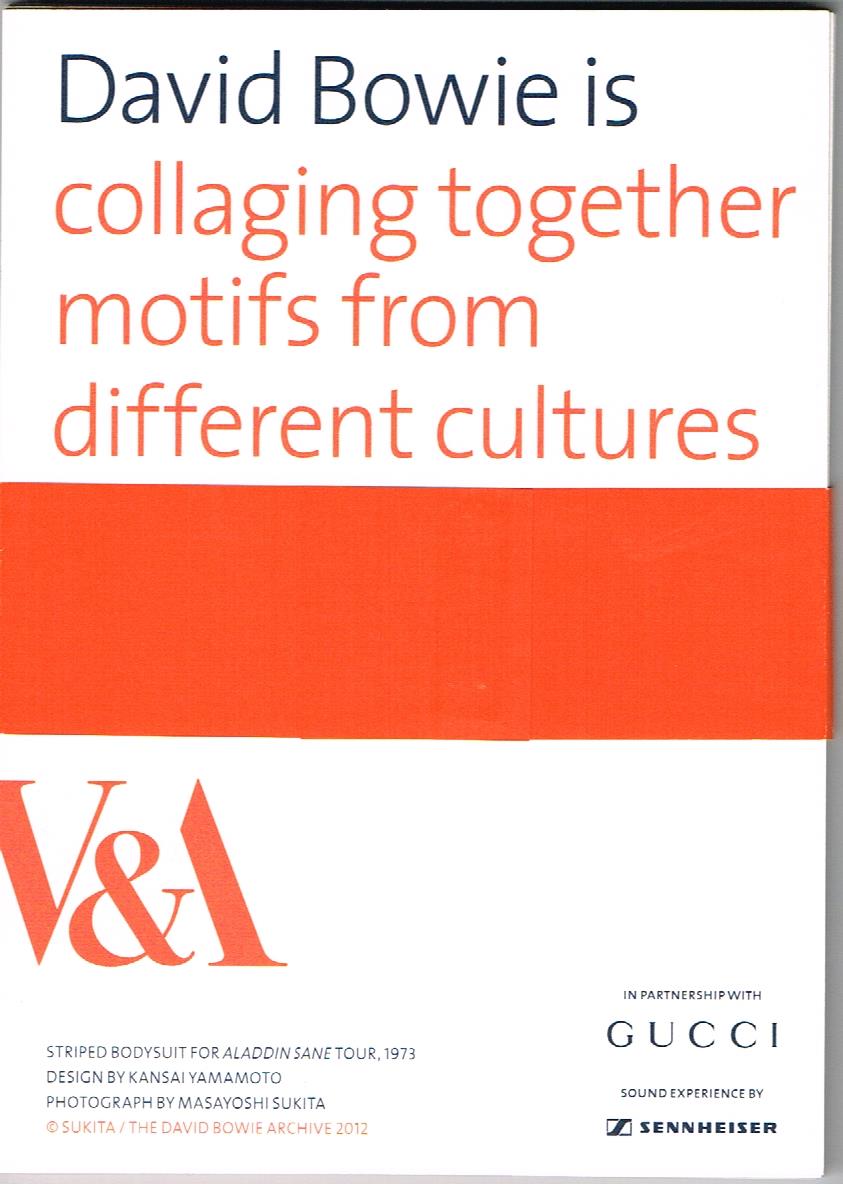
The official title of the exhibition is David Bowie is and throughout the several rooms this lavish production occupies that sentence is completed with all manner of statements, some of which are easier to decipher than others. Here I show two sides of one of the souvenir postcards with a paper band around it; Bowie’s striped bodysuit from the Aladdin Sane tour of 1973 was designed by Kansai Yamamoto.
The V&A’s Theatre and Performance curators, Victoria Broackes and Geoffrey Marsh, were given unprecedented access to the David Bowie Archive (note the important capital A) which includes a vast range of objects, including the nameplate of the Brixton street in which David Robert Jones was born on January 8 1947,

a publicity still for his early band in 1963

and a form for an ad in the actors’ directory Spotlight shortly after he’d made an uncredited appearance in the 1969 British film The Virgin Soldiers.

Every visitor to the exhibition will be given a head set, courtesy of sponsor Sennheiser, through which to hear a fascinating “sound experience” and narration to accompany the exhibits. The soundtrack plays automatically as you move round the show.

This neon sign and the door beneath it are two of the early variations on the David Bowie is theme.

The installation features a quilted suit designed by Freddie Burretti for the Ziggy Stardust tour of 1972 against a large screen playing Star Man as performed on Top of the Pops on July 5 1972. Burretti , who died in 2001, also designed the next three suits:

as seen on the cover of Pin Ups (1973);

The Life On Mars video (1973)

and the Diamond Dogs promo shots and tour (1974). The last two are featured in my book, Sharp Suits, which gives over four pages to celebrate Bowie the suit-wearer.

This number was designed for the Serious Moonlight tour of 1983 by Peter J Hall.
I took this photo at the Milton Keynes Bowl concert on that tour; it was not what you’d call an intimate gig.

Nearly 30 years later, I got a better view of the concert on the very big screen at the V&A.


David Bowie is in more fancy tailoring in this last exhibit of the show, which is placed appropriately next to the exit. Once you have handed your headset back, you arrive in the Bowie shop, which is full of a vast range of merchandise ranging from plectrums to posters. I could not resist, at £35, the 320-page hardback book that complements the show and includes images of many of the exhibits – including close-up shots of the clothes – and is packed with text on the great man,


David Bowie is on the front cover as Aladdin Sane (1973) (photo by Brian Duffy) and in a 1995 persona on the back cover (photo by Garth Evans). All in all, this is a tremendous retrospective worthy of such an influential figure. The big question at the press view was: will Bowie bother to show up at the show?
Ladies’ night at The Golden Shears
Tuesday, March 19th, 2013
Emily Squires, an apprentice at Henry Poole & Co on Savile Row, was awarded The Golden Shears, the top prize in the bi-annual Olympics for the younger generation of the bespoke tailoring trade, at a ceremony in the Merchant Taylors’ Hall in the City of London last night.

As if she didn’t have enough to carry already, I presented Emily with a signed copy of the revised edition of my book Sharp Suits. 
Some 50 young apprentices and fashion school students entered the competition this year. Their task was to design, cut and make – almost entirely by hand – an outfit to show their skills. A quintet of eminent Savile Row cutters – Richard Anderson of Richard Anderson, Alan Bennett of Davies & Son, Peter Day of Denman & Goddard, Joe Morgan of Chittleborough & Morgan, and Kathryn Sargent of Kathryn Sargent – judged the 50 entries for their technical standards and, based on their assessment, the best 25 entrants went forward to the gala fashion show at the historic hall.

The outfits were sent down a long catwalk anonymously – the programme notes gave a description of the outfit but not the name of the tailor. (This black and white suit with placement panels was by Nga Law, a female student at Nottingham Trent University).

The outfits were judged for style by a panel of celebrity judges, namely chef Raymond Blanc, actress Joanna Lumley, TV presenter Nick Hewer, fashion journalist Hilary Alexander and fashion retailer Lloyd Johnson. Their marks were integrated with those of the technical judges to arrive at the three winners.

Emily Squires’s winning outfit comprises a blue velvet frock coat with hand-quilted lining, a navy moleskin waistcoat and Tattersall jodhpurs. As well as the handsome Golden Shears trophy, she picked up a cheque for £2,000.

The Silver Shears and a cheque for £1,500 went to Jennie Mcwalter of Anderson & Sheppard for a striking ensemble of a red hunt dress coat with off-white silk facings, a backless double-breasted vest and tartan dress trousers.

The Rising Star Silver Shears went to Yan Zhang of Havering College for a very neat and precise asymmetrical jacket and skirt.

I have been to four finals of The Golden Shears over the years and I always am amazed at the amazing standard of work. Entrants that caught my eye this year included Patricia Recht of Welsh and Jeffries for this patchwork three-quarter length jacket,

Anna-Luisa Wilheim of Maurice Sedwell for this silk dinner jacket with hand-embroidered shawl lapel,

Danielle Jude of Batley School of Art for this tweed suit

and Emma Martin of Dege & Skinner for this mess-style coat and black high-waisted trousers. It was interesting to note that of the 25 finalists this year, only three were male. Women have won The Golden Shears four times in the past five contests. Bravo, ladies!
In the Swims
Saturday, March 16th, 2013
“If it keeps on rainin’, the levee’s gonna break”. Led Zeppelin’s re-working of Memphis Minnie’s warning of imminent disaster has been much in my mind of late. England may be a green and pleasant land, but it’s also very wet. So I have been delighted by an unlikely addition to my winter wardrobe – a pair of galoshes by the Norwegian brand Swims.

A galoshe is an overshoe, in this case a rubber one, which protects nice, expensive footwear from the horrors of a British winter,


The Swims slip over your shoes very easily. I accept that they look a bit odd, but once you get over this minor distraction, you realise that they are a great invention. They are available in a large range of colours. I just happen to like green. It must be my Irish antecedents.

The patterned sole offers some useful grip on a wet or icy surface.

You can laugh at puddles in your Swims, which retail for about £55 (a damn sight cheaper than new pair of shoes).

And they come with a handy carrying pack for when/if it stops raining.
Funnily enough, galoshes (or galoches) are not a new invention. I am proud to be a Liveryman of the Worshipful Company of Pattenmakers, a City of London Livery Company with strong links to the footwear business (pattens were platforms worn beneath shoes or boots in medieval times to lift the footwear out of the mud). Our company embraced “the ancient mystery of galochemakers” as far back as the 1400s. A good idea is indeed timeless.

My thanks go to Paul Smallpage, Swims UK agent in the north, for bringing these fine products to my attention.
Sign up for The Musgrave Manifesto
Latest posts
- Black Ivy: A Revolt In Style
- Nino Cerruti’s personal wardrobe
- My top topcoats
- Fine Scottish knitwear from Scott & Charters
- The Modern Shetland Sweater by Skippers Mill
- Leeds Then And Now evolves
- Celebrating Sportswear International